AI - Looking Forward to a Brighter Future
- nirvaankhanna2011
- Mar 3, 2025
- 3 min read
AI, a term that has been normalised in almost every household worldwide. However, how much does the average person actually know about AI? In the modern day, information is infinite and available in the form of the internet; however, AI takes this one step further. Artificial Intelligence is a technology that permits mechanical objects and computers to mimic human intelligence based on experience gained from iterative processing and algorithmic learning. AI is a form of intelligence that is used to solve problems and come up with solutions that match those created by human minds in a matter of seconds.
These artificial intelligence systems work by learning from patterns and features that appear in the data which they analyse. Once the system recognises these patterns, they can be placed in a variety of applications from where they learn and adapt to new data which they are provided by humans. Over time, these AI systems improve their accuracy and ability to perform tasks like image recognition, language processing and data analysis with greater accuracy.
In reality, the groundwork for AI was laid in ancient times when inventors developed automatons (mechanical objects that worked independently of human intervention). The earliest record of an automaton lies in 400 BCE. The true birth of the artificial intelligence

concept was idealised in 1950-56, when Alan Turing published “Computer Machinery and Intelligence" which was later renamed to the Turing test. This test would later be used to measure the strength of computer intelligence. The first implementation of “artificial intelligence” occurred in 1952 when a computer scientist named Arthur Samuel created a program that could play checkers. In the period between 1957-79, the idea of artificial intelligence started to mature. However, the AI boom really occurred between 1980-87, the first conference ever for AI was held at Stanford. There were several ideas published in that time including the first model of a self-driving car. One of the most famous surge in AI development was when Deep Blue and AI program defeated world champion Gary Kasparov at chess marking the start of an AI revolution. Currently, we are amidst the period of Artificial General Intelligence, and it will be interesting to see where we move forward in the future.
Artificial intelligence permits machines to process and analyse data similar to the way humans do, thereby making these machines useful counterparts to people in day to day life. AI can be used to solve problems in the workplace, automate various tasks at a go and save time in a plethora of ways. AI has already been implemented in several fields like finance, healthcare and education, and has proven effective when it comes to completing repetitive data driven tasks and making decisions based on a set of data which has been input.
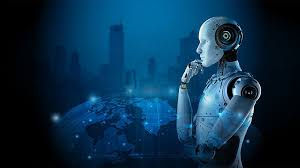
However, how does this all apply for the average person, when will you or I ever need AI at home? The truth is, you and I are already using AI, we just don’t realise it. Digital assistants, search engines, online shopping, social media platforms, etc. These are all examples of AI implemented to improve human experience on a variety of interfaces. However, even generative AI like ChatGPT can be used by anyone. You could generate a trip itinerary, a recipe for a new dish you want to try, or even come up with complex code to help develop a website that you were planning to create. AI is for everyone.
However, paradise is always accompanied with some issues. AI has been proven to be inaccurate in The past and if implemented in dire situations like surgery may not be trusted to do the job properly. There are also issues with bias in AI bots and privacy and personal data is always a concern. Additionally, the implementation of AI in a variety of fields will increase unemployment rates drastically as people's roles in industries like financial service and banking disappear. Even so, I believe the benefits definitely outweigh the costs.
Artificial intelligence is a technology that allows machines and computers to form human-like responses and ideas based on data that is analysed by an algorithm. It can and has been implemented already worldwide in many industries to reduce the amount of redundant work for humans. It is also already implemented in applications like social media or online shopping platforms that make it accessible to everyone. Even more complex generative AI can be used by the average person in many ways. As a whole, AI is revolutionising the realm of possibility for computers and machines.


I agree, AI is pointing to a brighter future, even though I sometimes fear its power!