The WEF conference at Davos - Economics in a Fragmented World
The World Economic Forum recently held its conference in Davos from 19th-23rd January, where some of the world’s most powerful people came together to discuss the pressing

economic issues in a fragmented world. Some of the major talking points were around the use of economic policy as a tool for national security and a weapon to be wielded rather than to help a nation grow its own economy, as well as the conversation about the growing threat and possibilities surrounding AI.
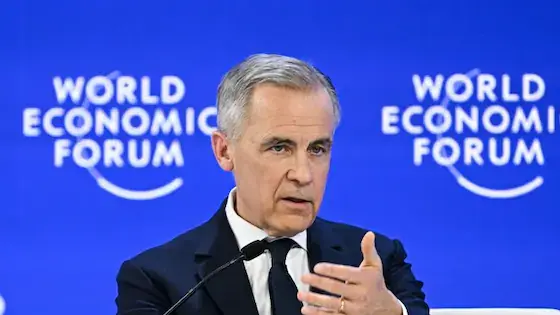
One particularly powerful speech in my opinion was made by the Canadian prime minister Mark Carney who brought to light the damaged world order that governs us. He highlighted the necessity for middle power countries to work together to avoid hegemony rather than to choose to ally themselves between isolated superpowers. This revelation came after Carney referenced the fact that international law and rules-based governance were no longer relevant in today’s world where superpowers rule by transactional power. He indicated that the key to breaking this hegemony was in the power of the less powerful. Additionally, he pointed out that countries need to build their own autonomy rather than relying on superpowers and that they need to form strategic partnerships.
The debate around economic policy was largely centered around the employment of tariffs and supply chain leverage being used as tools of national security. These talks were motivated by the increased geopolitical tensions that exist in the current state of the world which have led to increased worry about national security. Tensions have been exacerbated due to the increased polarisation of superpowers forcing other countries to pick sides. This was seen through the tariffs implemented by the Trump administration which led to increased separation and heightened global conflict between countries. It was also a prime example of countries utilising economic policy for political agendas, and demonstrated the changing world order where the line between illegal and legal when it comes to tariffs and other such economic policy is no longer decided by international law but rather the whims of global powers.
Alongside the discussion about the effect of geopolitics on economic policy, the conference also had conversations about the direction in which economics is moving. Artificial intelligence and its possibilities for furthering economics as well as the difficulties that are associated with it dominated the dialogue. Discussions remained centered around how we can utilise artificial intelligence to help increase productivity while finding a balance with protecting human jobs. The common consensus was that AI should be used to augment humans rather than replace them. Interestingly, the Future of Jobs Report from the WEF in 2025 indicated that AI development will actually result in a net gain of 2 million jobs by 2035, even accounting for all the jobs that will be replaced. The AI regulation argument remained prominent with ideas surrounding how governments can enforce responsibility while not limiting innovation and development.
Along with the debate about AI and increasing productivity, there were further talks about the importance of investing in human resources as well. The importance of furthering investment into education and workforce reskilling was seen as of paramount importance, especially considering the shifting job market due to artificial intelligence. In my opinion, these discussions were even more important due to the rising income inequality across countries and populations. Improved education will help those who are in poverty gain

access to jobs, especially in developing countries. Also, one of the key themes throughout the conference was the disjointed global landscape, so there was much conversation about the importance of rebuilding the trust between governments and their people.
Unlike previous years of the conference, this year’s discussions on climate change shifted perspective from prevention to a more adaptation-based approach. The topic was not a major theme and discussions around mitigation were pushed to the side. Leaders accepted that the issues created by climate change are happening right now and the final verdict on measures to be taken were more about coping with a changing climate. In a way, this change might seem a little disheartening for the progress the world has been looking for with climate change. The idea that mitigation is no longer favoured over adaptation shows that we are in a position where climate change (in some form) is now inevitable.
Overall, the Davos 2026 conference underscored the changes in economic policy and how it is being used, artificial intelligence and its potential, and the shift in perception on pressing issues like climate change. Mark Carney’s speech highlighted the changing narrative in the world order where superpowers hold the key to international law. The talking points around AI included the importance of finding a balance between boosting productivity and increasing economic output, while the importance of investing in human labour was not lost either. Also, the sobering reality of climate change was seen through the discussions around adaptation rather than solely mitigation. The WEF conference at Davos highlighted the change in global governance while also conversing about the future of economics and other issues like climate change.


Very well written