African Debt Crisis - A crippling burden
- nirvaankhanna2011
- Jan 16, 2025
- 5 min read
A few weeks ago my older brother was preparing for an MUN, his topic was the African debt crisis. As he researched the subject, there were lively discussions at home with my parents about economics and politics. I found this very interesting and started to read about this on my own. I find the position that a number of African countries find themselves in, incredibly difficult and would like to think that it should be a priority for the world to resolve this crisis. After all, Africa is home to 18% of the world’s population. Some of them are the poorest in the world.

A debt crisis is a situation where a country or a group of countries cannot meet their debt
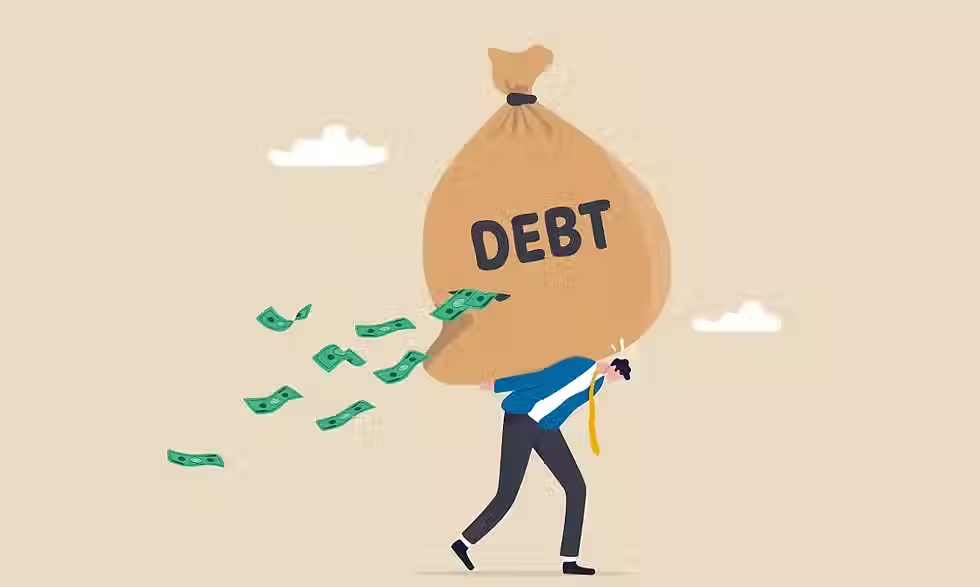
obligations (interest and principal) resulting in a default on the payment or the restructuring of the debt itself. This is exactly the situation in Africa currently, with a total of $1.8 trillion of debt and 56% of the nations in the continent spending more on debt servicing than basic healthcare for their people. The debt to GDP ratio of African countries has gone up by 30% since 2010, and what makes this situation even worse is the way that this debt is structured. African countries have a lot of external debt (debt owed to foreign entities) and global financial pressures mean that the local currencies of these nations grow progressively weaker in comparison to the constantly growing values of the universal currencies, in which the debt is owed, like the dollar. All of

this adds up to make sure that the debt servicing costs are so high that the governments have little or no money left for necessaries like public healthcare and education..
The debt crisis is caused by a variety of different factors. Global financial crisis’ and trade and export shocks play a large role in creating debt for poor African countries. The Russia-Ukraine conflict has had massive repercussions on many nations, it caused energy prices to spike to a 30 year high, making power that was already scarce to begin with an even rarer resource. The fluctuating prices, high exchange rates for even local commodities, caused inflation (rising prices) in over 40% of African countries to hit double figures making the poor even poorer. The war also majorly affected import and export in Africa, many of the poorer nations relied on Russia and Ukraine for critical commodities like wheat, fertiliser and steel. According to the IMF, prices of basic and staple foods increased by 23% between 2020-22, the highest increase in the continent since the 2008 financial crisis.
Another cause for the devastating situation in Africa is a lack of accessible credit for the nations. The cost of borrowing for African nations is roughly 11.6% above general market rates and over triple that of the US. This cost is increased further due to newer creditors like China and also a lot of private creditors with high interest rates only looking to make money. One might think to themselves, the obvious solution to this problem is for organisations like the IMF to offer concessionary loans through development organisations. However, this is already happening and it does not seem to be working too well. The HIPC (Heavily Indebted Poor Countries) is an organisation set up to help African countries escape the debt spiral into which they have fallen. While the loans which they offer definitely do help, they are very often policy based which mean that African countries have to spend a large part of the money that they have received to meet several extremely stringent conditions that have been put into place by committees like the IMF. This is why to avoid these types of loans, African countries find themselves having to go to private creditors which means higher interest rates. Sometimes, the rates are so difficult to pay, the countries have to take additional loans to pay off the other loans, and eventually, all of this debt stacks up.
45% of total African loans are taken in the US dollar, this means that when repaying the debt (and interest) countries have to also take into account the increasing value of the dollar in comparison to the local currency of an African country. This means that the nation will end up having to pay more money to service the debt than they would have when they took the loan initially. One possible solution to this pressing issue could perhaps be “dedollarization” to help diversify the currencies with which they take loans to reduce risk.
Solutions to the African debt crisis are difficult to come by, however, perhaps the most simple solution would be for the IMF and other international organisations to find ways to provide concessional loans without stringent conditions that have to be met. This would mean fewer private loans at market rates as well. These organisations should also communicate with the private corporations to restructure the loans to help African countries
escape the spiral. In terms of future measures, perhaps SDR’s or Special Drawing Rights could help African countries add to their reserves. These could be lent from major international holders like the US at concessional rates and while the countries would still have to pay small amounts of interest, it is a far better option and it allows the borrowing countries public spending opportunities as they would be able to spend a multiple of the value of the SDR. This could be used to service debt or bolster education and healthcare. Finally, perhaps the creation of an African Union in the future could help strengthen the economies of the region as a whole, and maybe a new currency could emerge with which countries could take loans without having to worry about the value varying.
From projects in school on Sustainable Development Goals and the climate crisis, I understand that the underdeveloped nations are finding it difficult to meet their targets due to lack of financial and other resources, e.g. technology. Climate and sustainability are global issues and therefore the problems of Africa ought to be a concern for all countries. As a whole, the African debt crisis is a problem which requires the utmost attention. Countries flung into a vicious cycle with no way to escape is terrible for the people of that region and the world. We need to find ways to provide loans at concessionary rates without having to apply stringent conditions. A solution to this problem is crucial for the wellbeing of the people in that region as it would mean that Africa can start focusing more on healthcare and education. A debt crisis is a serious matter and it requires our collective efforts to help do something about it.


Excellent article, you are helping us understand this better too!
Very proud of this one Nirvaan. Great research and your writing demonstrates a good understanding of a complex topic. Well done!